
Twilio target
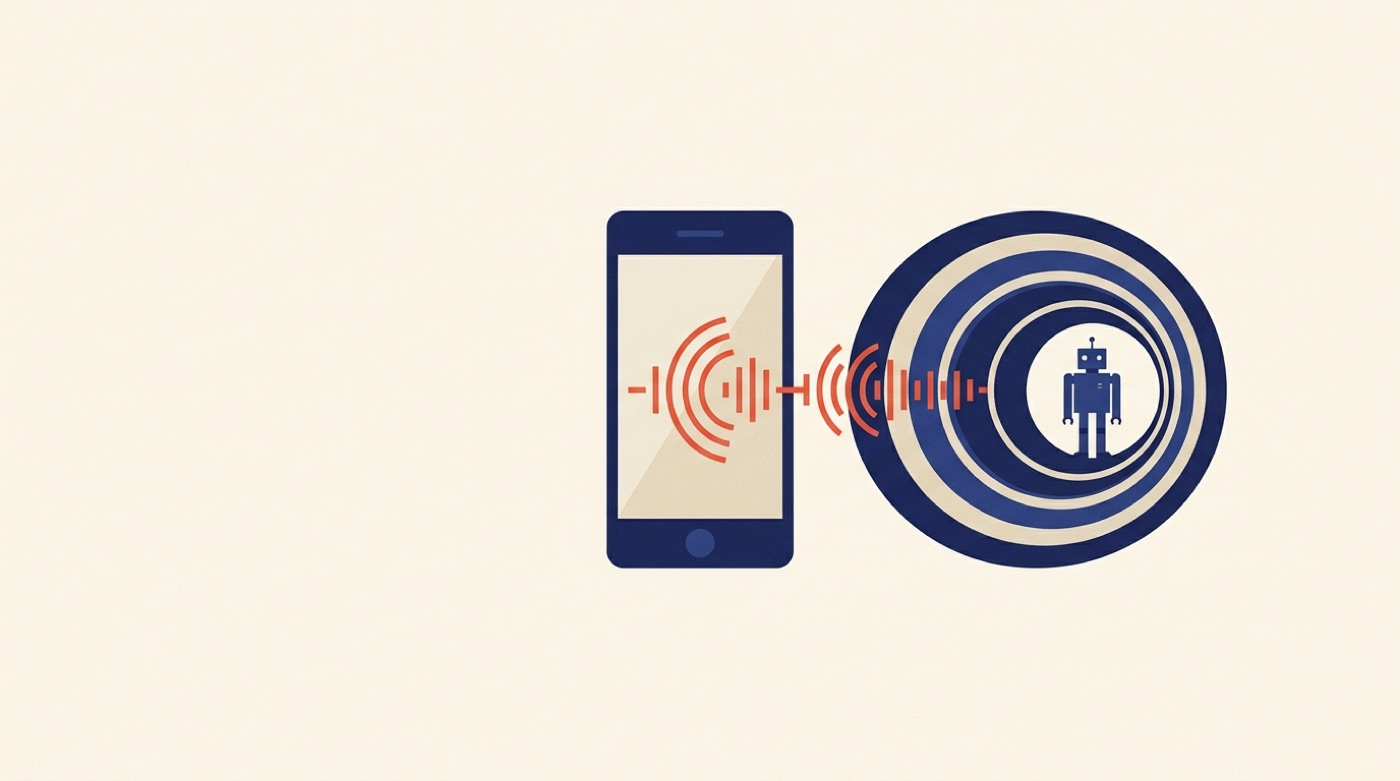
The twilio target tests a voice agent built on Twilio Media Streams without a phone number,
a trunk or a call: tamesu plays Twilio’s side of the websocket. It connects to the agent’s stream
URL (the <Stream url="…"> of its TwiML), sends connected and start with the media format
and your custom parameters, streams the simulated caller’s speech as μ-law media events at
8 kHz, sends dtmf events, acknowledges the agent’s marks once their audio has played, honours
clear, and reads the agent’s media as its speech. Agents built on Twilio directly, on Vapi-
or Retell-style frameworks that expose a Media Streams endpoint, or on any server that speaks the
protocol are tested the same way.
targets:
  phone:
    type: twilio
    url: "${AGENT_STREAM_URL:-wss://agent.example.com/media}"
    headers: { Authorization: "Bearer {{secrets.STREAM_TOKEN}}" }
    parameters: { caller_tier: gold, language: en }     # customParameters of the start event
    from: "+15550100"                                   # From and To the agent reads from customParameters
    to: "+15550200"
tests:
  - name: return after 40 days
    target: phone
    persona: { name: Marta, style: "polite, slightly confused", language: en, voice: en-US-female }
    scenario:
      goal: "Find out if you can return shoes bought 40 days ago"
      max_turns: 6
      script:
        - wait_for: "how can I help"
        - dtmf: "2"
    assert:
      - judge: "The agent states the 30-day window and does not promise an exception"
      - metric: { name: time_to_first_audio_ms, p95: { lt: 2500 } }
The target is audio only, like the phone: it needs the speech models (speech.tts.model and
speech.stt.model in tamesu.yaml) to speak the persona’s turns and to hear the agent, and
the persona’s voice, language and behaviours apply as on the LiveKit
and SIP targets. Audio travels as it would on a call: 8 kHz μ-law, 20 ms
chunks, paced in real time, with a short silence after each utterance so the agent’s voice
activity detector sees the end of the turn.
Keys
| Key | Meaning |
|---|---|
url | The agent’s Media Streams websocket. ws://, wss://, or http(s):// for a plain upgrade. |
headers | Handshake headers; credentials as {{secrets.NAME}}. |
parameters | The customParameters of the start event, what <Parameter name="…" value="…"/> sets in TwiML. Values render {{vars.x}} and {{secrets.X}}. |
from, to | Added to customParameters as From and To, where agents usually read the caller and the dialled number. |
idle | Silence after the agent’s last media that ends its turn (default 2s). |
turn_timeout | How long to wait for the agent to answer a turn (default 60s). |
What a run records
Each turn is the agent’s audio transcribed by the STT model (as it arrives, when the model
streams: Deepgram, assemblyai/universal, soniox/stt-rt-v3; the stt_ms metric is that wait), with the usual turn metrics;
time_to_first_audio_ms is measured from the end of the caller’s utterance to the agent’s first
media event, greeting_ms from start to the agent’s first media when it speaks first,
call_duration_ms from start to stop, plus agent_speech_ms, user_speech_ms, marks
and clears. The stereo audio.wav (left the caller, right the agent) is in the run directory
and plays in the HTML report. The events list start, greeting, dtmf, every mark the
agent asked for and every clear it sent, so a barge-in handler’s behaviour is visible.
Marks are answered the way Twilio does it: when the agent sends mark, tamesu replies with the
same mark once the audio queued before it has played out in real time, so an agent that waits
for a mark before listening again works unchanged. clear empties the playback queue, which
is what the agent uses when the caller interrupts.
Without the phone
This target removes Twilio, the carrier and the number from the loop, so it runs in CI against the agent’s websocket alone and costs nothing but the speech models. What it cannot test is the part it removes: real call setup, the carrier’s audio, DTMF detection on a real line. For that, the SIP target places real calls through a LiveKit SIP service.
Barge-in
A caller does not wait for the agent to finish. With behaviors.interrupt_probability on the
persona, tamesu stops listening partway through an agent turn (after 0.6 to 2 seconds of its
audio, at random, repeatable with the test’s seed) and speaks its next line while the agent’s
audio is still playing. Twilio’s protocol has one right answer to that: the agent detects the
caller’s speech and sends clear to drop the audio it had queued. interruption_stop_ms is the
time from the caller’s first word to that clear; when the agent never clears, it is the time
until the audio it had already queued would have played out, which is what the caller heard.
interruptions counts them; the turn the caller cut short is marked interrupted in the
transcript, and the events read interrupting, interruption, clear and interruption_stopped
with the measured time. An interrupt_missed event means the agent had finished before the
caller got to speak.
persona:
  name: Marta
  behaviors: { interrupt_probability: 0.5 }
assert:
  - metric: { name: interruption_stop_ms_p95, lt: 800 }