
AI: Genkit everywhere
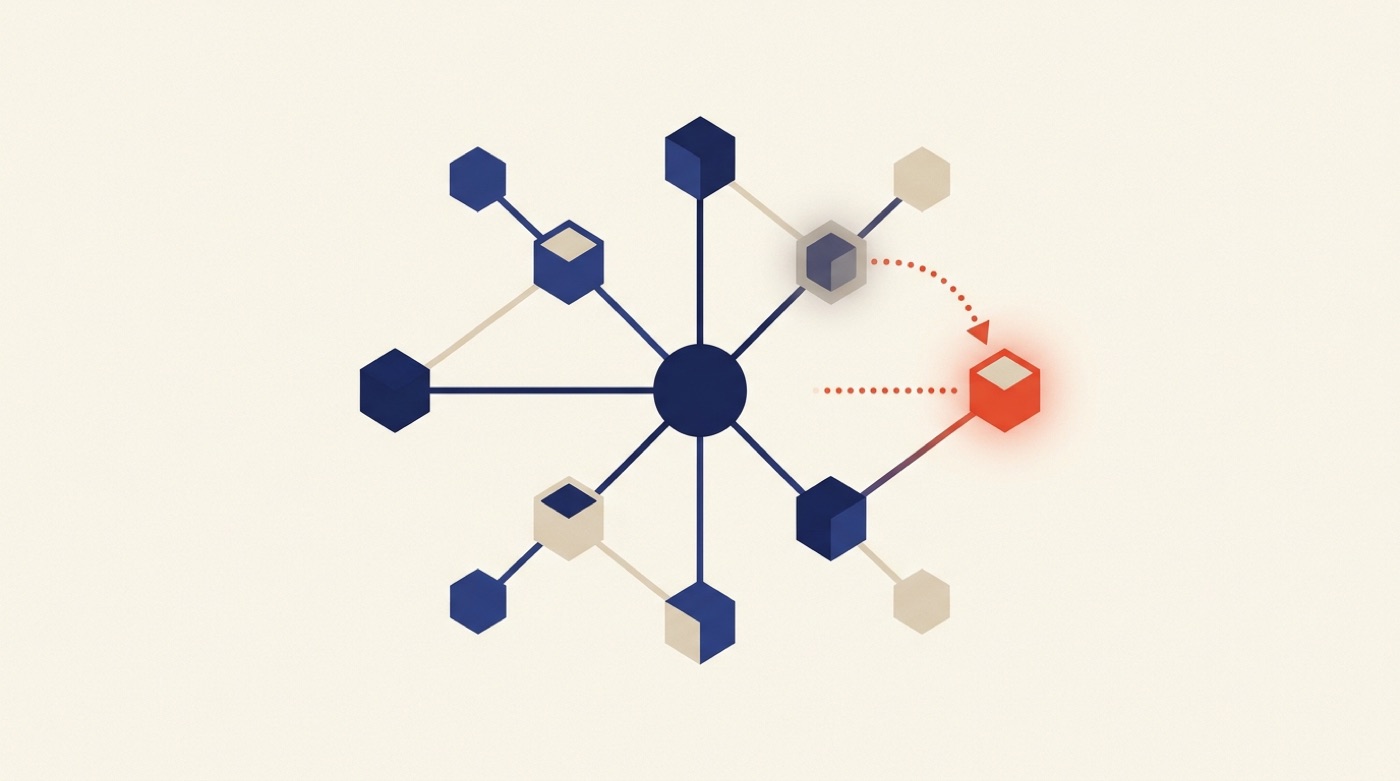
Every model call in tamesu goes through Genkit: the simulated user, the judges, the Genkit evaluators, speech (text to speech and speech to text), the browser agent and scenario generation. Every model is a Genkit reference, so switching provider is a config change; every call is a traced flow you can open in the Genkit Developer UI; and usage is counted and priced on every response.
Models and plugins
genkit:
  plugins: [googlegenai, anthropic, openai, ollama, evaluators]   # only these are initialised
models:                                     # every value is a Genkit model reference
  default: googleai/gemini-2.5-flash
  judge: anthropic/claude-sonnet-4-6
  simulator: openai/gpt-4.1-mini
secrets:
  GEMINI_API_KEY: env:GEMINI_API_KEY
  ANTHROPIC_API_KEY: env:ANTHROPIC_API_KEY
OPENAI_API_KEY: env:OPENAI_API_KEY| Plugin | Model references | Credential |
|---|---|---|
googlegenai | googleai/gemini-2.5-flash, googleai/gemini-2.5-pro, … | GEMINI_API_KEY (or GOOGLE_API_KEY) |
anthropic | anthropic/claude-sonnet-4-6, … | ANTHROPIC_API_KEY |
openai | openai/gpt-4.1-mini, … and the speech models openai/gpt-4o-mini-tts, openai/tts-1 (text to speech), openai/gpt-4o-transcribe, openai/whisper-1 (speech to text) | OPENAI_API_KEY |
ollama | ollama/llama3.1, any local model | none (OLLAMA_URL for a remote server) |
deepgram | deepgram/nova-3, deepgram/nova-2 (speech to text), deepgram/aura-2, deepgram/aura-2-thalia-en (text to speech) | DEEPGRAM_API_KEY |
elevenlabs | elevenlabs/eleven_flash_v2_5, elevenlabs/eleven_multilingual_v2, elevenlabs/eleven_v3 (text to speech), elevenlabs/scribe_v1 (speech to text) | ELEVENLABS_API_KEY |
cartesia | cartesia/sonic-3.6, cartesia/sonic-3 (text to speech), cartesia/ink-whisper (speech to text) | CARTESIA_API_KEY |
soniox | soniox/stt-async-v6, soniox/stt-rt-v3 (speech to text; stt-rt-v3 is the real-time model) | SONIOX_API_KEY |
assemblyai | assemblyai/universal, assemblyai/slam-1, assemblyai/nano (speech to text) | ASSEMBLYAI_API_KEY |
azure | azure/tts (text to speech, the voice picks the neural model), azure/stt (speech to text, fast transcription) | AZURE_SPEECH_KEY and AZURE_SPEECH_REGION |
rime | rime/arcana, rime/mistv2 (text to speech) | RIME_API_KEY |
googlespeech | google/chirp3-hd, google/neural2, google/studio (text to speech, the voice family), google/chirp_3, google/chirp_2, google/long (speech to text, Speech-to-Text v2) | GOOGLE_CLOUD_API_KEY (or GOOGLE_API_KEY); speech to text also needs GOOGLE_CLOUD_PROJECT and optionally GOOGLE_CLOUD_LOCATION |
speechmatics | speechmatics/enhanced, speechmatics/standard (speech to text, batch) | SPEECHMATICS_API_KEY |
gladia | gladia/solaria-1 (speech to text, pre-recorded) | GLADIA_API_KEY |
evaluators | the evaluators genkitEval/deep_equal, genkitEval/regex, genkitEval/jsonata | none |
fake | fake/simulator, fake/judge, fake/text, fake/tts, fake/stt | none; only in a build with -tags llmfake |
Credentials are the resolved secrets with those conventional names, or models.credentials: { googleai: "{{secrets.MY_KEY}}" } for another name. The provider of every configured model is
initialised even when plugins forgets it. tamesu doctor reports each model and whether its
credential resolved.
The jobs: models.simulator plays the user, models.judge grades, models.browser_agent drives
the browser, models.scenario_generator drafts suites, and models.default serves every job
without a model of its own. models.embedder is the embedding model behind
similar_to assertions (googleai/text-embedding-004,
googleai/gemini-embedding-001, openai/text-embedding-3-small, …); when unset, tamesu uses
the usual embedder of the default model’s provider, and Anthropic has none, so a suite that
judges with Claude and compares meaning needs embedder set. Gemini, OpenAI and Anthropic models can take any of the roles; every
flow asks the model for JSON in the shape its prompt declares, in the provider’s
structured-output mode.
Retries and fallbacks
A provider that rate-limits, times out or is briefly down should not fail a test, and a provider that is down for the afternoon should not fail the run. Every model call tamesu makes is retried, and can hand over to another model:
models:
  default: googleai/gemini-2.5-flash
  judge: anthropic/claude-sonnet-4-6
  fallback:
    default: [openai/gpt-4.1-mini]           # for every job without a list of its own
    judge: [googleai/gemini-2.5-pro, openai/gpt-4.1]
  retry: { attempts: 3, backoff: 500ms, max_backoff: 10s }   # the defaults
speech:
  tts: { model: googleai/gemini-2.5-flash-preview-tts, fallback: [elevenlabs/eleven_flash_v2_5] }
  stt: { model: deepgram/nova-3, fallback: [googleai/gemini-2.5-flash] }
A call is tried attempts times on its model when the failure is one the model may not repeat:
a rate limit (429), an overloaded or unavailable provider (5xx), a timeout, a dropped
connection, or a reply that was not the JSON the prompt asked for. The wait starts at backoff
and doubles each time, with jitter, up to max_backoff; attempts: 1 retries nothing. A failure
the model will repeat (a bad request, an unknown model, a refused key) is not retried: the call
moves straight to the first fallback, which gets its own attempts, and so on down the list. The
run’s own limits are never worked around: a spent budget or a cancelled run stops at once.
This covers every model call of every target: the simulated user and the judges of the
conversational targets, the browser agent and its expect checks, the scenario generator, the
embedder of similar_to (its own fallback.embedder list, since a chat model cannot embed), and
the speech models of audio mode and the phone targets. A TTS fallback on another provider speaks
with that provider’s voice of the same description. The model target has its own
fallback list, since the model under test is the suite’s choice.
A test’s retries setting is a different thing: it re-runs a whole test whose infrastructure
failed.
Every retry and every handover is a warning on stderr with the job, the model and the error,
and the run’s summary line and summary.json count them (3 retries, 1 fallback) next to the
model calls, so a provider having a bad day is visible without reading logs. tamesu doctor
lists the fallback models with their credentials like any other model.
Flows
| Flow | Input → output |
|---|---|
simulateUserTurn | persona, scenario, history, turn budget → { say, dtmf?, hang_up?, stop, reason } |
judgeRun | rubric, scale, transcript, tool calls, metrics → { pass, score, reason, evidence[] } |
synthesize | text, voice hint, language → PCM (the caller’s turn, audio mode) |
transcribe | PCM, language → { text, confidence } (the agent’s turn, audio mode) |
Each flow is one span in the trace; the simulator and judge responses carry their trace id into
result.json.
Speech
speech:
  tts: { model: googleai/gemini-2.5-flash-preview-tts, voice: en-GB-female }
  stt: { model: deepgram/nova-3, language: en }
  vad: { provider: energy }
Text to speech is a Genkit model that answers with audio: Gemini TTS
(googleai/gemini-2.5-flash-preview-tts, googleai/gemini-2.5-pro-preview-tts), OpenAI
(openai/gpt-4o-mini-tts, openai/tts-1), ElevenLabs (elevenlabs/eleven_flash_v2_5),
Cartesia Sonic (cartesia/sonic-3.6), Deepgram Aura (deepgram/aura-2), Azure AI Speech
(azure/tts), Google Cloud Text-to-Speech (google/chirp3-hd, google/neural2) or Rime
(rime/arcana) through the bundled plugins. Speech to text is a Genkit
model that takes the agent’s audio and answers with text: Gemini (googleai/gemini-2.5-flash),
Deepgram (deepgram/nova-3), OpenAI (openai/gpt-4o-transcribe, openai/whisper-1),
ElevenLabs Scribe (elevenlabs/scribe_v1), Cartesia Ink (cartesia/ink-whisper), Soniox
(soniox/stt-async-v6), AssemblyAI (assemblyai/universal), Azure (azure/stt), Google Cloud
Speech-to-Text (google/chirp_3), Speechmatics (speechmatics/enhanced) or Gladia
(gladia/solaria-1).
Switching provider is a config change, and fallback: [...] on either names the models that
take over when the first fails (see retries and fallbacks).
Deepgram, AssemblyAI (assemblyai/universal) and Soniox (soniox/stt-rt-v3) transcribe as they
listen: the voice targets feed them the agent’s audio as it arrives and read the transcript when
the turn ends, so a turn waits for its last words only (the stt_ms metric), where another model
is sent the whole turn once it is over and answers after a round trip. The twilio target always
transcribes that way; livekit, sip and voice do with transcript_source: stt (under auto the
agent’s own transcript is expected, and the audio is transcribed once at the end only when none
came). A model that does not stream is buffered behind the same handle, and a stream that drops
mid-turn falls back to one call over the audio it had received, so the setting is safe with any
provider. The plugins expose this as OpenTranscription, through the dependency-free
llm/plugins/speechstream contract, for any Go program that wants a provider’s streaming
transcription without its SDK.
A persona’s voice is a hint, <language>-<gender> such as en-GB-female, es-ES-male or
just female, mapped to each provider’s voices (Gemini Kore/Puck, ElevenLabs
Rachel/Adam, OpenAI nova/onyx, Deepgram Aura thalia/apollo, Azure
en-US-AvaMultilingualNeural/en-US-AndrewMultilingualNeural, Rime luna/orion, Google Cloud
Aoede/Charon); a provider voice name or ID passes through. Cartesia voices are IDs from its voice library, so name one in
the hint or speech.tts.voice; without one every persona speaks with the same library voice. A
Deepgram Aura voice is a model of its own (aura-2-thalia-en), so deepgram/aura-2 with a
voice hint speaks with that voice, and a full voice name in the hint picks it outright. Rime
speakers belong to a model (luna and orion to Arcana), so name a Mist speaker when the model
is rime/mistv2. A Google Cloud voice is the family in the model plus the hint’s language and
speaker: google/chirp3-hd with en-GB-female speaks as en-GB-Chirp3-HD-Aoede, and a full
voice name such as en-US-Neural2-F in the hint is used as is. The hint’s language is also the
TTS language when speech.tts.language is not set.
Azure needs two secrets: AZURE_SPEECH_KEY and the resource’s region in
AZURE_SPEECH_REGION (westeurope, eastus, …), both declared under secrets: like any
other credential. Google Cloud speech takes a Cloud API key in GOOGLE_CLOUD_API_KEY (or the
GOOGLE_API_KEY Gemini already uses, when that key’s project has the speech APIs enabled);
speech to text also needs the project in GOOGLE_CLOUD_PROJECT and, for a regional endpoint,
GOOGLE_CLOUD_LOCATION (default global). Speechmatics and Gladia transcribe as batch jobs, so
each turn’s transcript takes a few seconds longer than a streaming provider’s.
The plugins under github.com/xavidop/tamesu/llm/plugins/ (deepgram, elevenlabs,
cartesia, soniox, openaispeech, azure, assemblyai, rime, googlespeech,
speechmatics and gladia) are ordinary Genkit model plugins and work in any Genkit Go app; openaispeech adds the speech models Genkit’s own
OpenAI plugin leaves out, under the same openai/ prefix. Speech is priced too, TTS per
character and STT per minute of audio, into the same budget. tamesu doctor has a speech check: the models and their credentials, the
voice activity detector and whether this build has audio support.
The voice activity detector (speech.vad.provider) decides when the agent is speaking:
energy (the default) listens for sound above the noise floor; silero runs the Silero neural
model and tells speech from music, tones and background noise. silero needs the full tamesu
build and the onnxruntime shared library: brew install onnxruntime
on macOS, your distribution’s package or a release tarball on Linux, onnxruntime.dll on the
PATH on Windows. tamesu finds it in the usual places; TAMESU_ONNXRUNTIME=/path/to/libonnxruntime.so
points at another one. tamesu doctor says which library it loaded.
Prompts
The prompts are dotprompt files embedded in the binary (simulator.prompt, judge.prompt,
browser_agent.prompt, expect.prompt, scenario_gen.prompt), each with a version: in its
front matter that is recorded with every result. To change one, copy it to .tamesu/prompts/<name>.prompt in your project and
edit it; the file with the same name replaces the built-in one. Keep the output schema, the
runner depends on it.
Dotprompt reserves a few helper names (history, json, role, section, media), and a
helper wins over an input with the same name: write such an input as {{this.history}}, not
{{history}}, which renders nothing. The simulator prompts read the conversation that way.
Replay: cached turns and verdicts
Every simulator turn and every judge verdict is cached under cache.dir/llm, keyed by the
request itself: for the simulated user, the persona, the scenario, the conversation so far, the
turn number and the version of its prompt, so a changed prompt is never answered from old turns;
for the judge, the rubric, the scale, the model and the conversation. A repeated
run of the same conversation therefore costs nothing and gives the same answers, and the console
ends with llm cache: N hits, M misses. Timing metrics are not part of a key, and an agent that
answers differently changes the conversation and so the key, so a regression is never hidden by
the cache.
tamesu runuses the cache and records what it had to ask the models.tamesu run --replaytakes the simulated user’s turns from the cache only, so a conversation that was never recorded fails the run instead of calling a model; judge verdicts come from the cache when present and from the model otherwise.tamesu run --update-cachecalls the models for everything and refreshes the cache.cache.llm: falseintamesu.yamlturns the cache off.
Commit the cache directory when you want a pull request pipeline that runs the conversational suites without model keys; the browser action cache lives next to it.
The Developer UI
genkit start -- tamesu run tests/support.yaml # or genkit.dev_ui: true in tamesu.yamlEvery simulator and judge call appears as a trace with its input, output and usage; result.json
links them by trace_ids. OpenTelemetry export works through Genkit’s standard telemetry plugins.
Cost
Usage is read from every response and priced from the built-in price list (USD per million
tokens, by model reference, longest prefix wins, unknown models cost 0). budgets.max_cost_usd and
budgets.max_tokens (or --max-cost-usd) stop the run when exceeded: runs in flight finish,
runs not started are marked budget, the exit code is 4.
Embedding tamesu in a Genkit app
client, err := llm.New(ctx, llm.Config{...}, llm.WithGenkit(g))llm.WithGenkit reuses the app’s own Genkit instance (its plugins, models, evaluators and
tracing) instead of initialising one, so an app can test its own agent in-process and judge it
with its own evaluators.
The MCP server
tamesu mcp serves the tamesu tools (tamesu_run, tamesu_validate, tamesu_schema and the
rest) to coding agents over the Model Context Protocol. See MCP server.
Running without keys
A binary built with -tags llmfake registers the fake plugin: fake/simulator and
fake/judge replay TAMESU_LLMFAKE_SCRIPT (JSON: simulator outputs in a cycle, a judge
verdict that fails any rubric containing FAIL, text replies, stt transcripts in a cycle),
fake/tts speaks a tone and fake/stt replays the transcripts, so whole suites, audio mode
included, run with no network: a dry run of your pipeline, or tests of your own tamesu setup. A
default build does not contain the fake provider.